
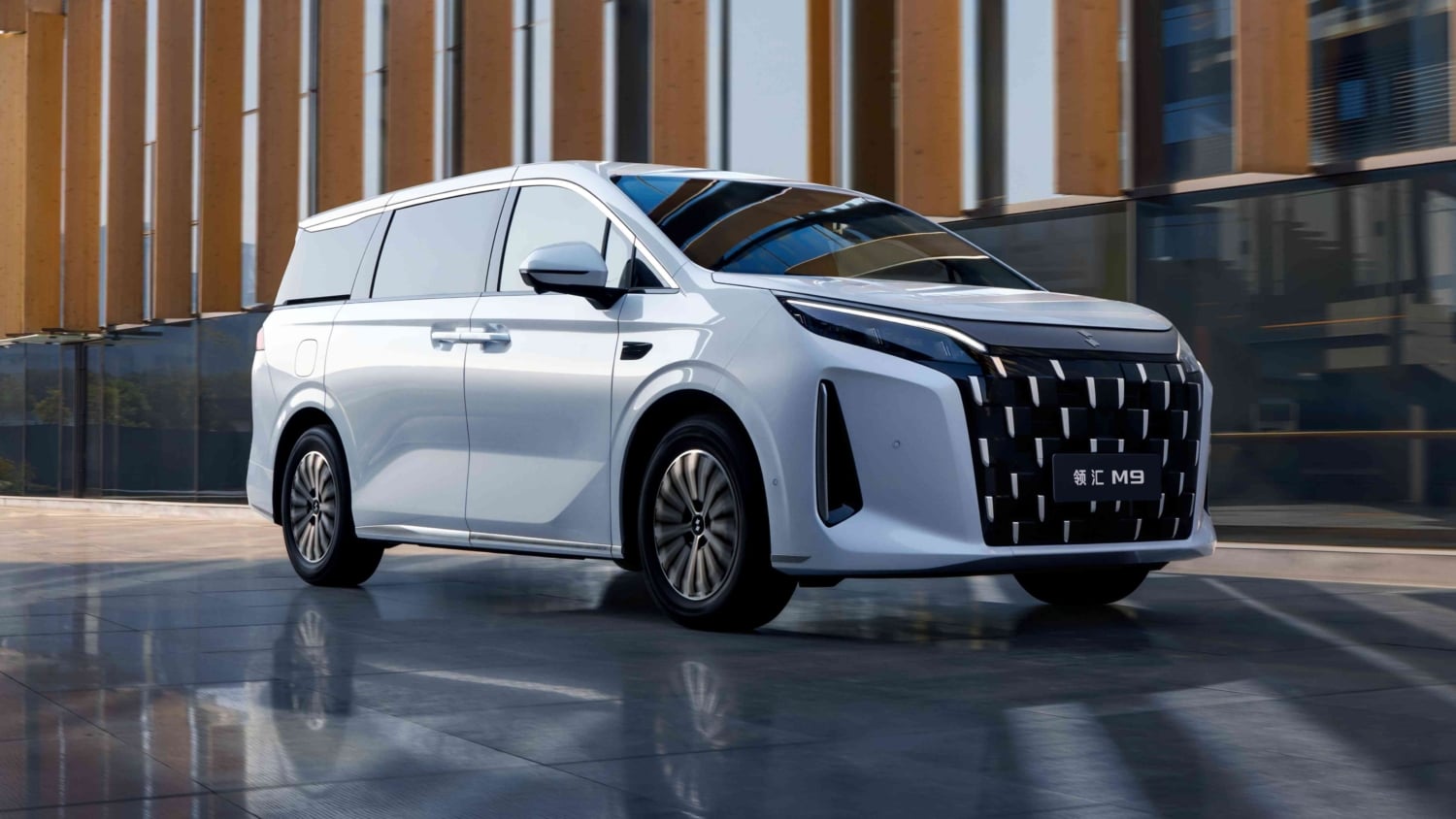
BYD has officially launched the Linghui M9 plug-in hybrid MPV, specifically designed for ride-hailing services in China. The Shenzhen-based automaker aims to counter the perception of being a budget brand with this new model, which starts at 188,800 yuan (approximately $27,770).
The Linghui M9 is based on the BYD Xia minivan, known internationally as the BYD M9. Key exterior modifications for ride-hailing use include a prominent chrome-accented grille, a single taillight unit, power sliding doors, and 18-inch wheels. Measuring 5,200 mm in length, 1,970 mm in width, and 1,805 mm in height, with a wheelbase of 3,045 mm, this minivan is 55 mm longer than the standard BYD Xia.

Inside, the Linghui M9 features a 2+2+3 seating layout for seven passengers. The entry-level variant includes a 12.8-inch touchscreen and a 12.3-inch LCD instrument cluster, while the top-trim model upgrades to a 15.6-inch main screen. The vehicle is equipped with the DiLink 100 infotainment system, which supports a four-zone voice assistant and Huawei HiCar connectivity.
Top-tier versions of the Linghui M9 come with heated, ventilated, and massaged seats for both the front and second rows, along with folding tables for second-row passengers. Additional features include a 12-speaker audio system and a continuous damping suspension system. The Linghui M9 has already reached dealerships across China.

Under the hood, the Linghui M9 uses the DM-i plug-in hybrid powertrain, combining a 1.5-liter turbocharged internal combustion engine producing 110 kW (147 hp) with an electric motor delivering 200 kW (268 hp). The MPV accelerates from 0 to 100 km/h in 8.9 seconds. A 26.6 kWh LFP battery provides an all-electric range of up to 118 km, while a 50-liter fuel tank extends the combined range to 1,105 km.
The BYD Linghui M9 is priced between 188,800 and 199,800 yuan ($27,770 to $29,390). Financing options include a five-year loan. Warranty coverage offers a lifetime warranty on non-commercial electric components for the first owner, six years or 150,000 km for the entire vehicle, and six years or 600,000 km for commercial electric components.
According to China EV DataTracker, BYD sold 376,990 vehicles globally in May 2026, marking the first time the automaker has stopped experiencing year-over-year declines since September 2025.