
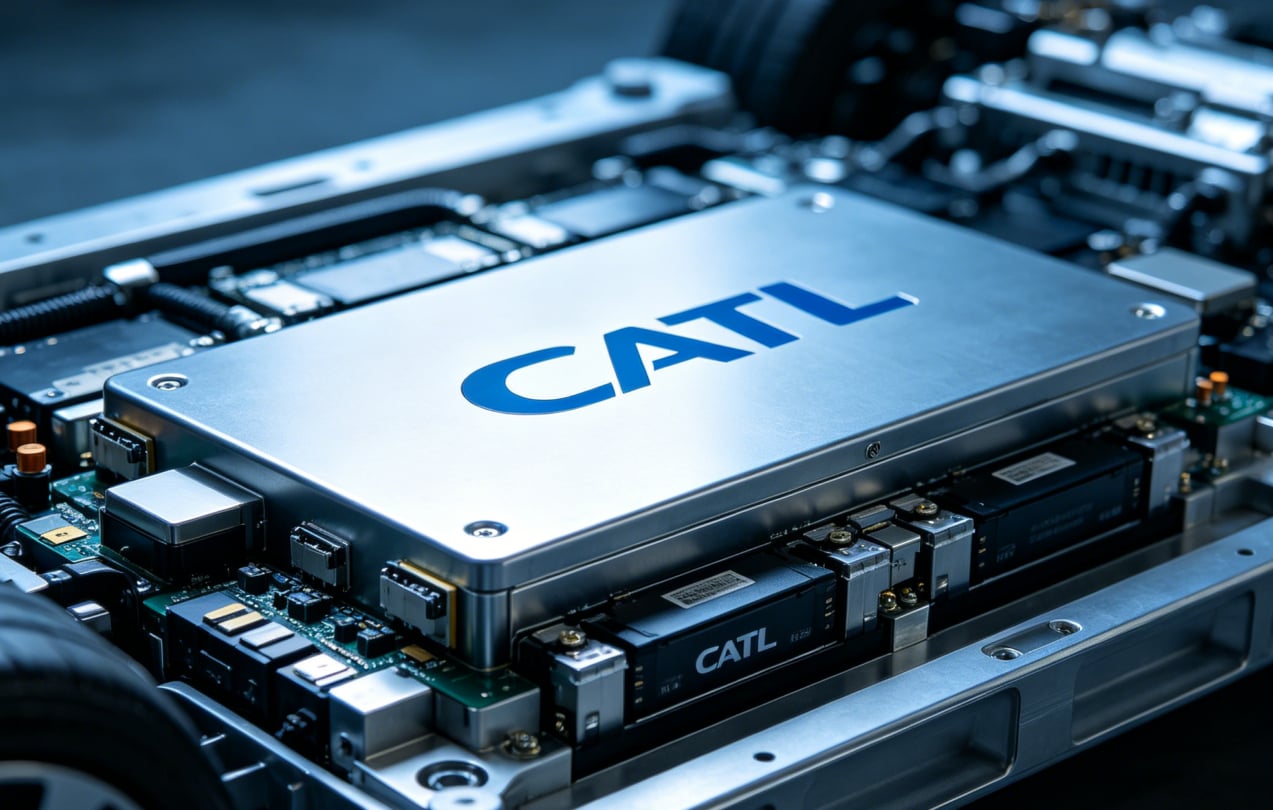
CATL has redesigned key vehicle battery cell components to overcome height limitations in electric sports sedans. The manufacturing change focuses on reducing physical vertical packaging barriers, enabling lower performance car silhouettes. This approach limits structural height dimensions before final battery pack assembly begins, as reported by Sina.
The newly granted hardware patent introduces an integrated thinned area directly below the terminal cover assembly. This extra space allows internal electrode tabs to fold tightly without touching the outer metallic housing walls. The design prevents internal micro short circuits during road vibrations, enhancing safety.
Packaging clearance
Thick under-floor battery packs remain a major challenge for designers of low-slung performance vehicles. Standard setups often force automakers to raise rooflines or compromise rear seat ergonomics to fit bulkier prismatic cells. The redesigned components reduce vertical footprint dimensions, enabling drop-chassis designs without sacrificing passenger space.
This geometric optimization directly addresses consumer protection priorities. The architecture acts as a mechanical safeguard, separating internal electrical networks from container walls during directional stresses. It builds on earlier CATL strategies focused on pack-level safety hardware to reduce thermal failure risks.
Financial strength
These hardware updates are supported by a 22.147 billion yuan (3.28 billion USD) research budget deployed throughout 2025. This continuous investment helps optimize liquid-electrolyte infrastructures as next-generation solid-state alternatives scale up. CATL’s capital strength allows it to prioritize physical containment over standard software monitoring patches.
The heavy R&D spending reflects broader operational resilience across the automotive supply chain. Specifically, CATL reported a single-quarter net profit of 20.7 billion yuan (3.06 billion USD) for the first quarter of 2026. This result surpassed the combined net profits of leading Chinese automakers such as BYD, Geely, and Chery.
Installation metrics
Commercial deployment data confirms CATL’s market position as these technical revisions enter production. According to monthly registration data from China EV DataTracker, the company recorded 33.08 GWh of total battery installations in May 2026. This represents a 13.8% month-on-month increase and a 35.2% year-on-year expansion.
CATL secured a 46.1% domestic market share baseline. The distribution chart shows that lithium iron phosphate chemistry accounts for the largest share of total volume, followed by lithium nickel-manganese-cobalt.